








Supramolecular host–guest chemistry — anion, cation and ion-pair recognition
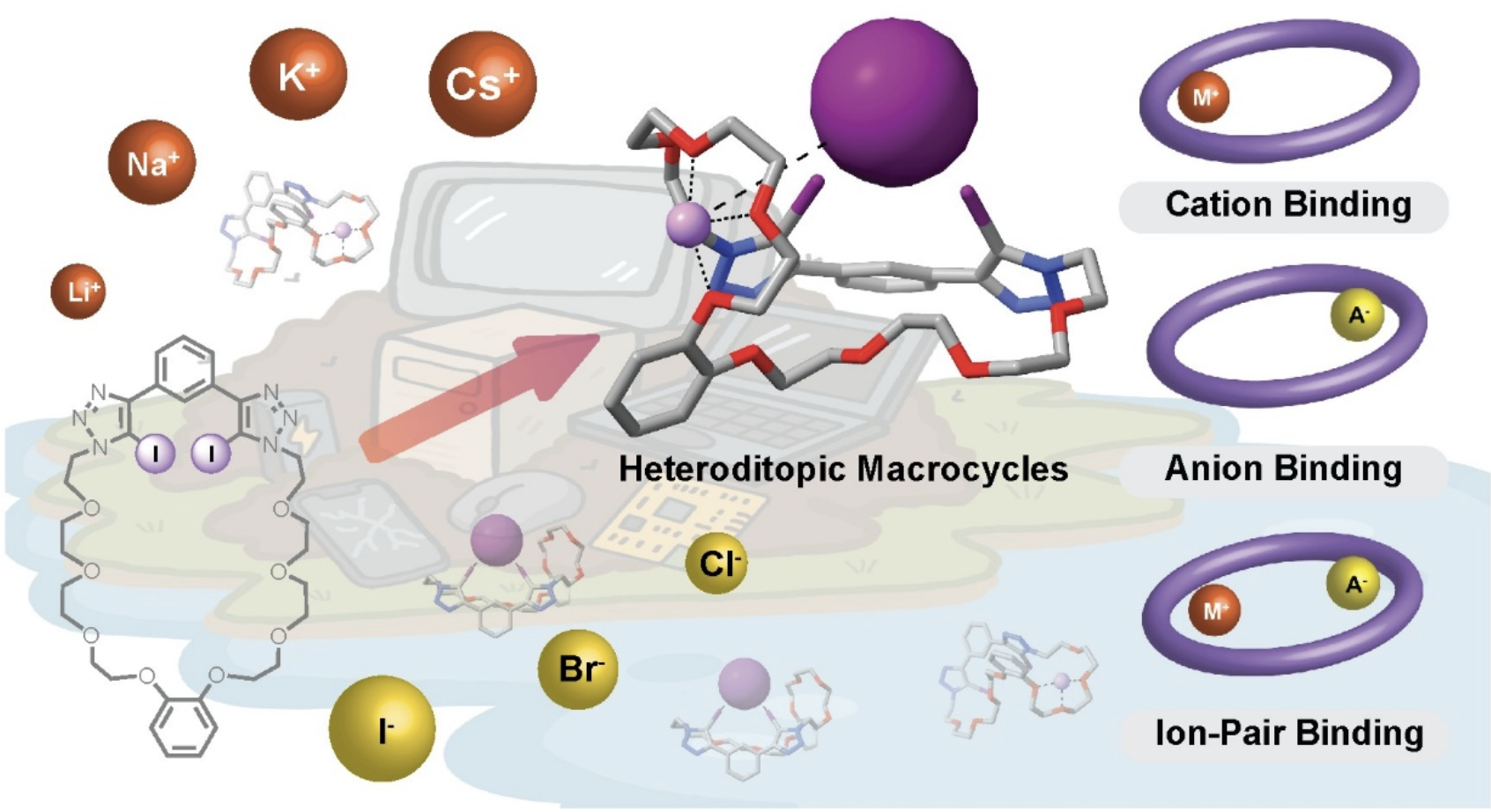
We investigate noncovalent strategies (electrostatics, hydrogen-bonding, halogen/chalcogen bonding, and encapsulation) to selectively recognise anions, cations, and ion-pairs in challenging media. Projects emphasize receptor design (including catenanes and multi-dentate macrocycles), the role of counterions in modulating affinity, and the translation of sensing motifs into aqueous-compatible sensors and extraction systems. (more…)
Sustainable polymers for environmental remediation
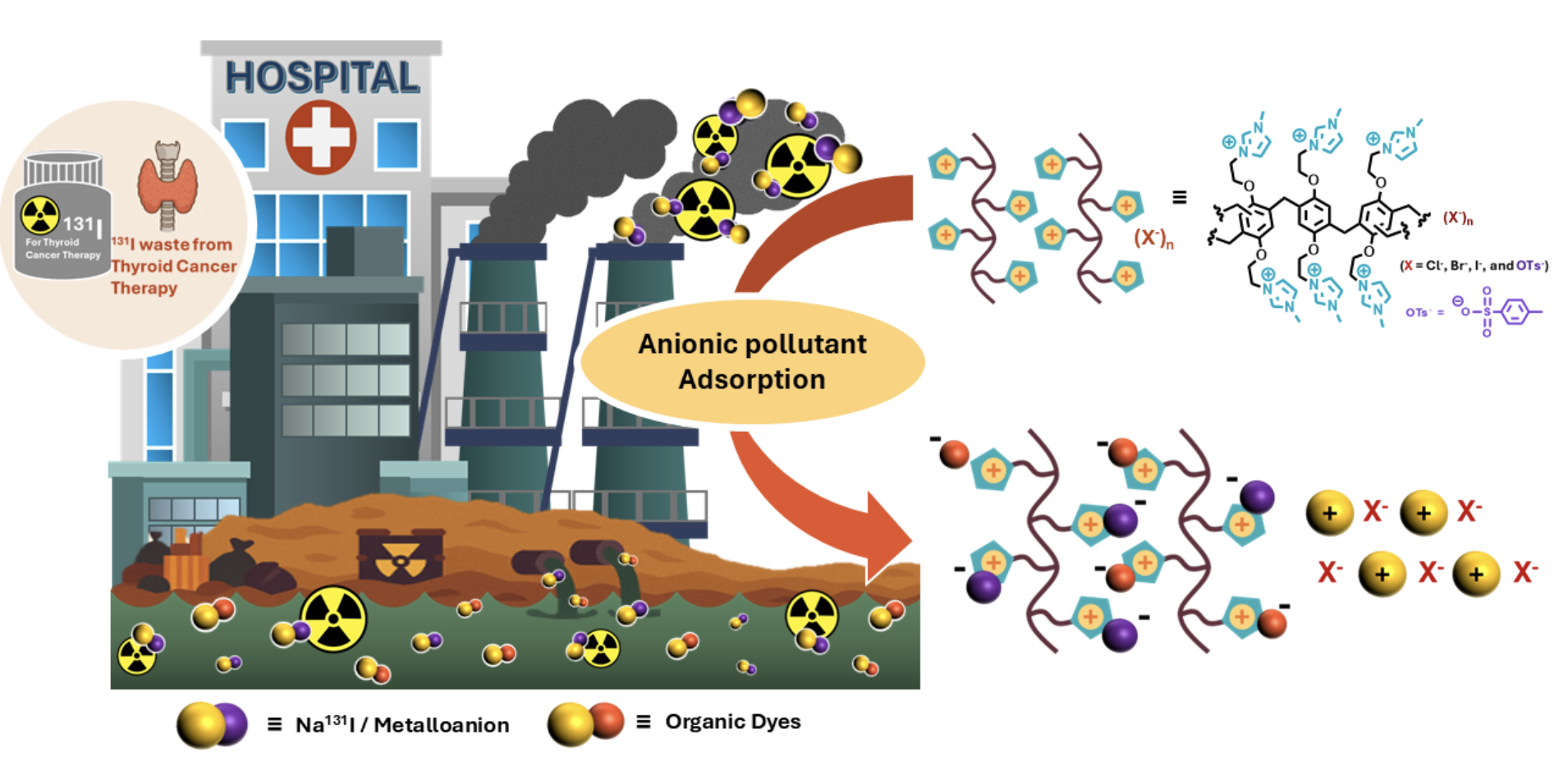
We develop functional polymeric adsorbents and hyper-crosslinked networks that use supramolecular motifs and post-synthetic functionalization to remove chemical pollutants (organic dyes, iodine species, and ionic contaminants) from water. Research integrates design of polymer scaffolds (e.g., tosylated hyper-crosslinked polymers), surface functionalization to tune selectivity, and application testing for fast, efficient adsorption and recyclability. (more…)
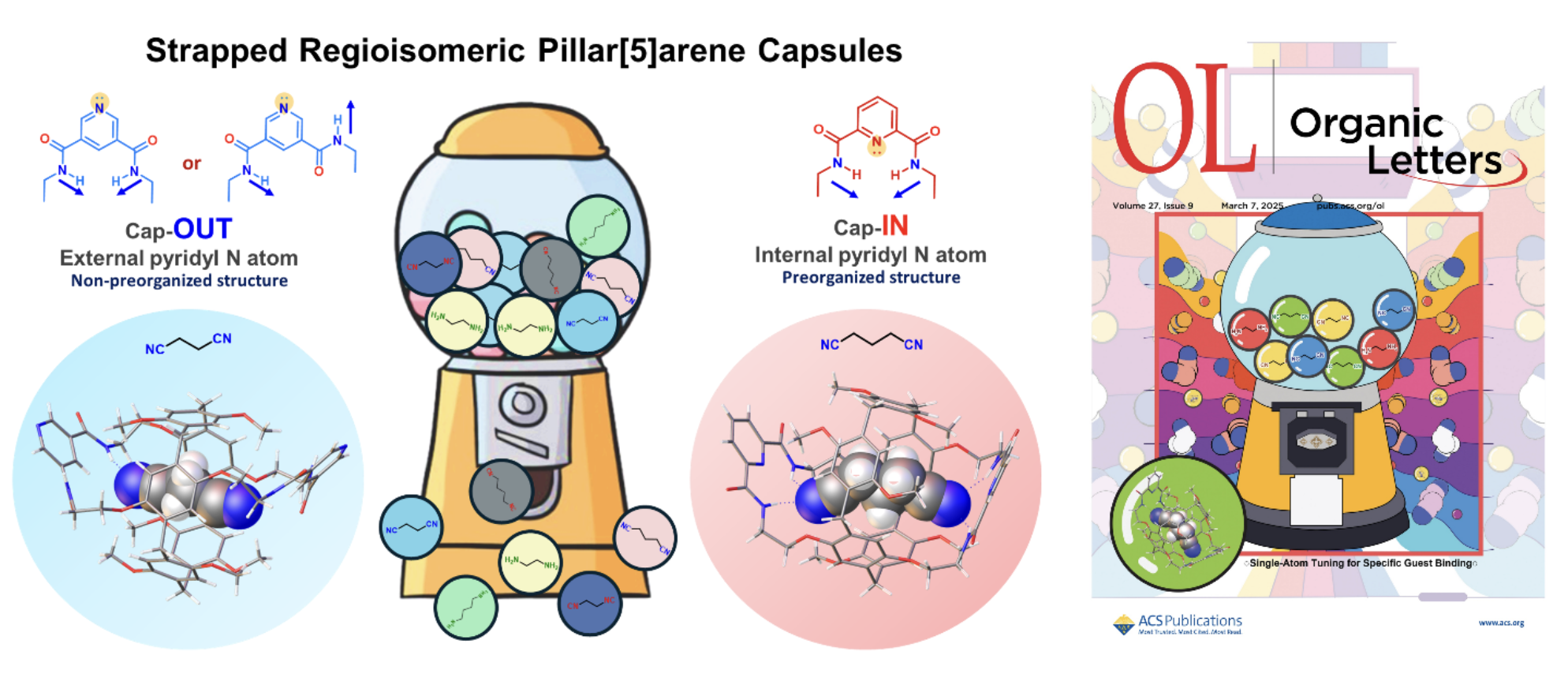
Supramolecular & macrocyclic chemistry — pillar[n]arene design and function
We design, synthesise and functionalise pillar[n]arene derivatives and related macrocycles to create tunable cavities and recognition sites for selective molecular encapsulation and stimulus-responsive assemblies. Our work spans new synthetic routes (including self-template and strap strategies), structural characterisation (NMR and single-crystal X-ray), and the use of subtle electronic/steric to control binding geometry and supramolecular polymer formation. (more…)

Supravalentine Lab presents at international chemistry conference
Our team recently presented research findings on host–guest supramolecular systems at an international chemistry conference. The work highlighted new strategies for selective ion recognition and responsive polymer materials. We are grateful for the valuable discussions and collaborative opportunities that emerged from the event.
New research article accepted for publication in Organic Letters
Our recent work on pyridine-strapped pillar[5]arene capsules with tunable ion-pair recognition has been accepted in Organic Letters. This study demonstrates precise molecular control to enhance selective binding performance. Congratulations to the team for their contributions and dedication. (more…)
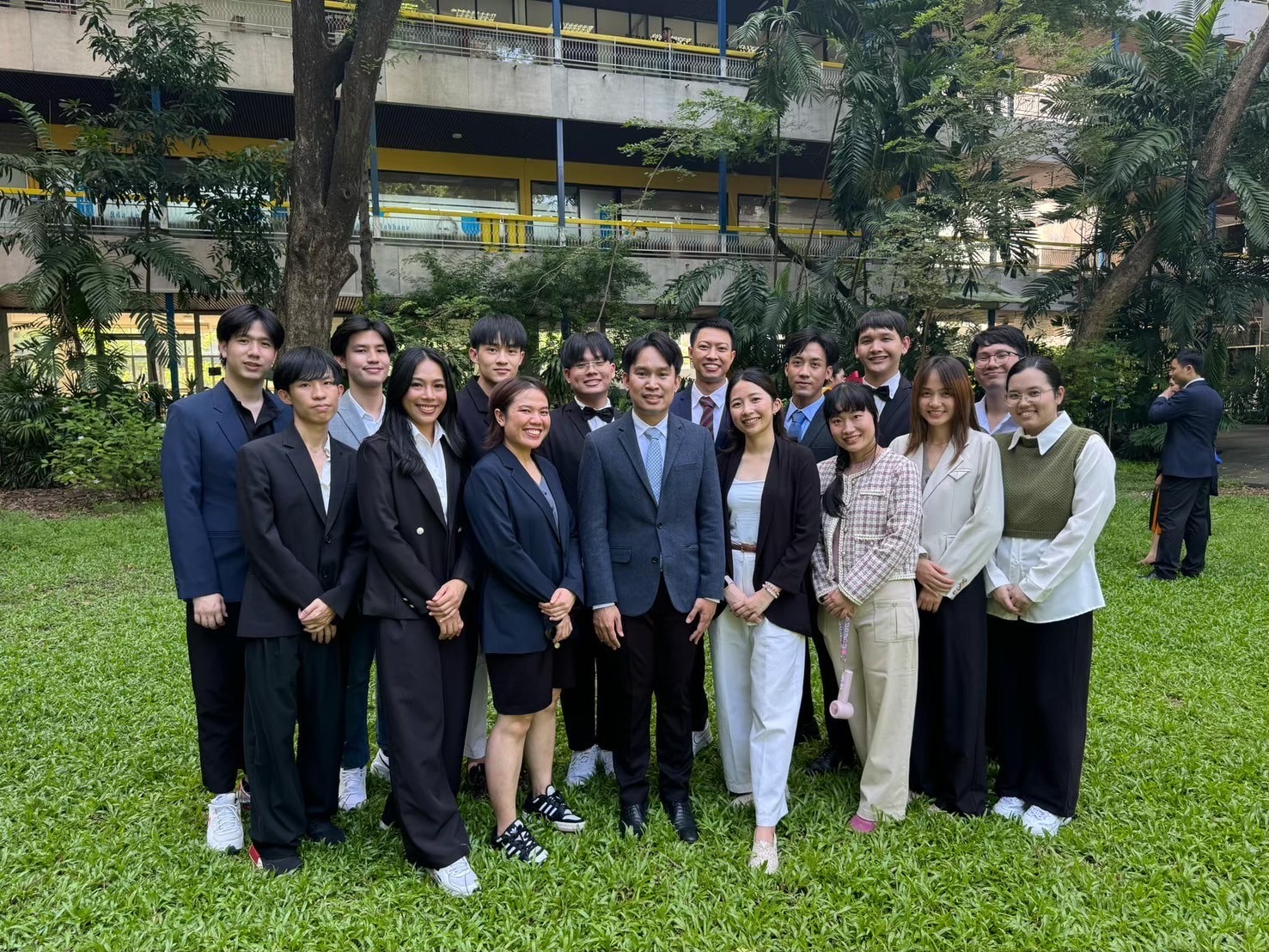
Mahidol Supramolecular Lab welcomes new research members
We are delighted to welcome new graduate students joining the Supravalentine Laboratory this semester. Their research will focus on supramolecular host–guest assemblies and functional polymer systems for environmental and biomedical applications. We look forward to productive collaboration and exciting discoveries together.